What Are the Main Options for Adding Underfloor Heating to an Existing Property?
Underfloor heating is an increasingly popular choice for homeowners looking to enhance comfort and energy efficiency in their properties. Installing retrofit underfloor heating systems into existing buildings poses unique challenges, primarily due to structural constraints where floor build-up and insulation cannot be significantly altered. The system selection depends on factors such as floor construction, available depth, heat source, and the level of disruption acceptable within the renovation programme. It’s crucial to understand that not all retrofit underfloor heating options perform equally across different property types, and incorrect system selection can compromise both efficiency and comfort.
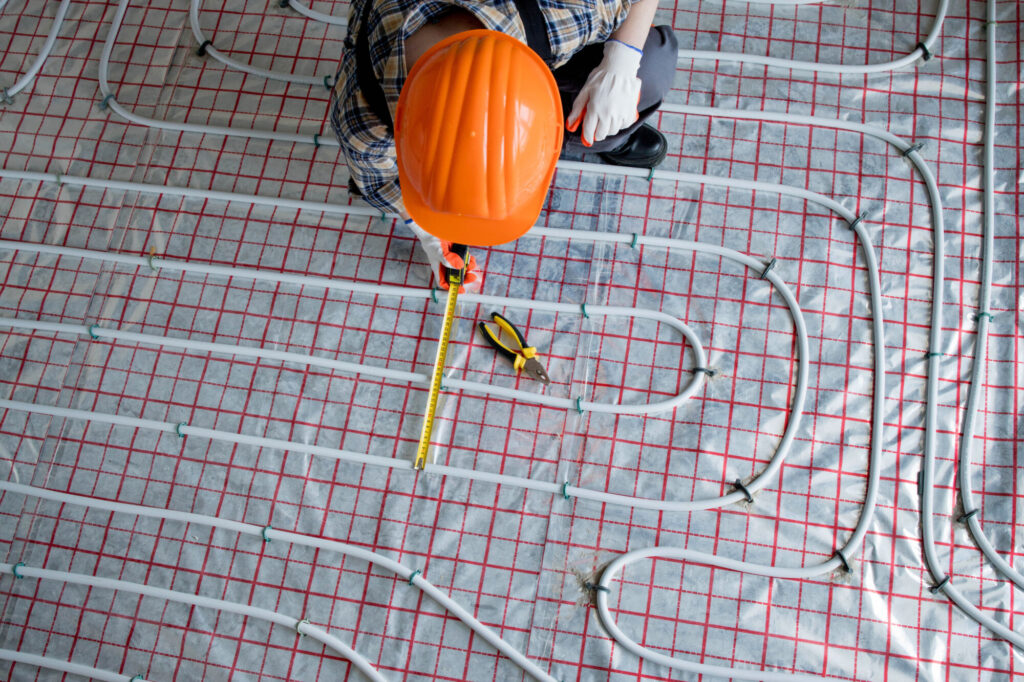
Overlay Systems
Overlay systems are a viable option for retrofit underfloor heating. These systems use low-profile overlay boards that sit above the existing floor, containing pre-formed pipe channels that increase the finished floor height. This approach is particularly suitable where the screed depth is insufficient for milling. However, it may necessitate adjustments to thresholds and doors. An important consideration is the provision of insulation beneath overlay systems to prevent downward heat loss, ensuring the system’s efficiency.
Milled Screed Systems
Milled screed systems involve mechanically cutting grooves into the existing screed to accommodate heating pipes without raising the finished floor levels. This method requires adequate screed thickness and a sound substrate condition. The minimal change in floor height makes milled screed systems particularly suited to renovation projects with tight structural tolerances, offering an efficient heating solution without significant structural alterations.
Electric Retrofit Systems
Electric retrofit systems, comprising electric mats or cables, are typically thinner and easier to install, making them ideal for smaller areas or single-room refurbishments. While these systems are convenient, their running costs may be higher than hydronic systems, depending on the tariff and usage pattern. Electric systems are often chosen where connecting to a wet heating circuit is impractical, offering a flexible and straightforward heating solution for specific scenarios.
Choosing the Right Approach
Selecting the appropriate retrofit underfloor heating option involves careful consideration of several factors. Heat loss calculations and floor surveys are essential to determine whether a hydronic or electric system is suitable. Additionally, the level of disruption, programme constraints, and long-term energy strategy should influence system selection. Engaging with a specialist installer early in the process reduces the risk of selecting an unsuitable retrofit method, ensuring optimal performance and efficiency.
Conclusion
If you’re exploring retrofit underfloor heating, the first step is identifying which system type is technically suitable for your floor construction and renovation scope. A professional survey and heat loss assessment will determine whether a milled, overlay, or electric solution is appropriate.
Contact Retro Therma to review your existing floor depth, insulation levels, and heating requirements before committing to a specific system. Early technical guidance ensures the most appropriate retrofit method is selected for long-term performance.