Is My Existing Floor Suitable for a Milled Underfloor Heating Installation?
Underfloor heating is a popular choice for homeowners seeking efficient and comfortable heating solutions. When considering a milled retrofit system, understanding milled underfloor heating suitability is essential to determine whether your existing floor can support this type of installation. This blog explores the key factors that influence the viability of installing a milled underfloor heating system in your home.
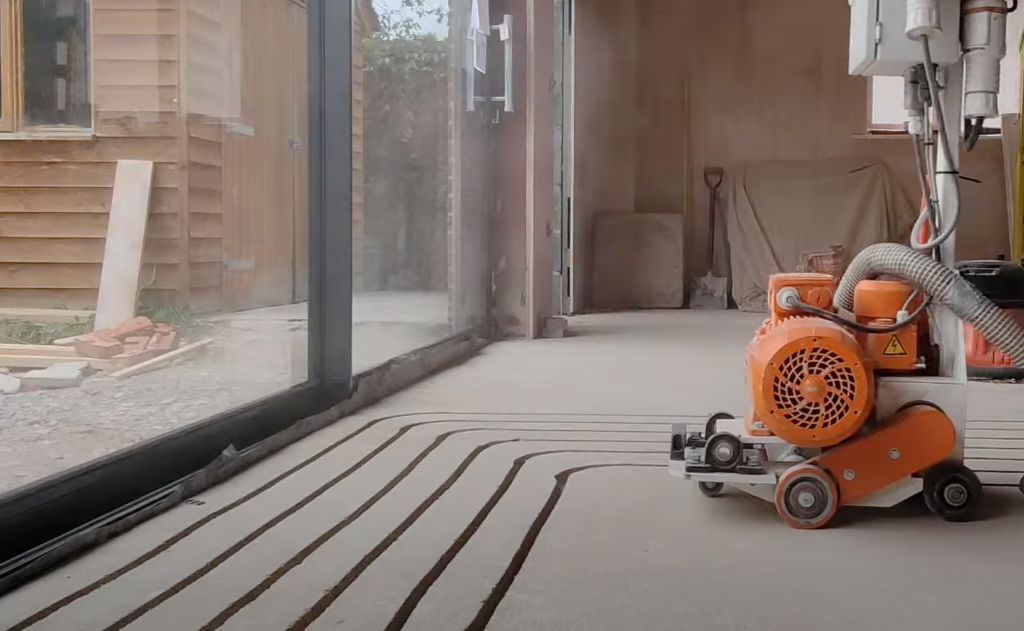
What Are Milled Retrofit Systems
Milled retrofit systems involve cutting channels into the existing screed to accommodate heating pipes. This process necessitates a thorough evaluation of the floor’s structural suitability to ensure safety and optimal performance. Contrary to common belief, the composition and depth of the floor are more critical than the property’s age in determining whether a milled system can be installed. A technical survey is essential to prevent any compromise to the structural integrity or heating efficiency.
Screed Depth and Condition
For a milled underfloor heating system to be feasible, the screed must have sufficient thickness to accommodate the pipe channels without weakening the slab. If the screed is cracked, friable, or poorly bonded, remedial work may be necessary before proceeding with milling. Accurate depth measurement is crucial to avoid inadvertently exposing insulation or structural concrete, which could lead to significant issues down the line.
Solid Versus Suspended Floors
Solid ground-bearing floors are generally more suitable for milling compared to suspended timber constructions. Suspended floors might require alternative build-ups or structural modifications to support the system. Additionally, assessing the moisture content and substrate stability is vital before installation to ensure the floor can handle the new heating system without complications.
Existing Insulation and Heat Loss
The absence of insulation beneath the slab can significantly impact the system’s efficiency and increase warm-up times. Therefore, it’s essential to evaluate the retrofit heating performance alongside the building’s overall thermal performance. Conducting heat loss calculations helps determine if the output from a low-temperature system will meet the design requirements, ensuring comfort and efficiency.
Professional Survey Requirements
To confirm the screed thickness and assess the floor’s suitability, core sampling or depth testing may be necessary. It’s also important to ensure that the pipe layout avoids structural movement joints and services within the slab. An early technical assessment reduces the risk of aborted installation or performance shortfall, saving time and resources.
Conclusion
Before specifying a milled underfloor heating system, it’s imperative to have your floor construction professionally assessed. Factors such as screed depth, condition, and insulation levels all play a crucial role in determining whether milling is technically viable.
Contact Retro Therma to arrange a detailed floor survey and heat loss calculation. Early confirmation of suitability prevents costly redesigns and ensures the system is installed within safe structural limits, providing you with a reliable and efficient heating solution.