Retrofit Underfloor Heating in Renovations: What You Need to Know
Underfloor heating is often associated with new build construction, primarily because it can be seamlessly integrated into the floor build-up and insulation strategy from the outset. However, modern retrofit underfloor heating systems have expanded its suitability for existing homes, making it a viable option for many renovation projects.
The key to determining its suitability lies in understanding the floor construction type, available build-up depth, insulation levels, and overall heat loss rather than simply the age of the property. An early feasibility assessment is crucial to prevent unrealistic expectations around disruption, performance, and cost.
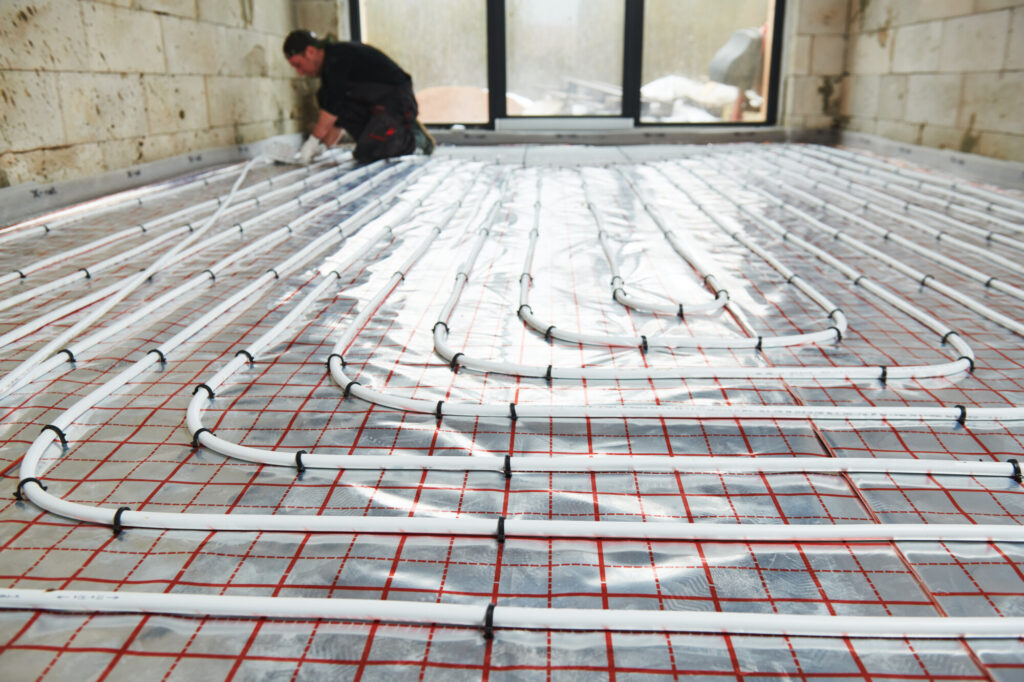
How Renovations Differ from New Build Installations
When it comes to underfloor heating, new builds offer the advantage of full control over slab depth, insulation thickness, and screed specification. This flexibility allows for an optimised design that maximises efficiency and performance. In contrast, renovations must work within existing structural constraints, which can pose challenges.
Existing properties may have variable screed depth, uneven substrates, or suspended timber floors that affect system choice. Additionally, factors such as ceiling heights, door thresholds, and stair risers can restrict the amount of additional floor build-up possible in retrofit situations. These constraints necessitate a careful evaluation of the existing structure to determine the most suitable underfloor heating solution.
When Underfloor Heating Works Well in Renovation Projects
Underfloor heating can be an excellent choice for certain renovation projects, particularly those with solid ground-bearing floors and adequate screed depth. In these cases, milled hydronic systems can often be installed without raising finished floor levels, preserving the existing aesthetic and functionality of the space.
Renovation projects that involve full floor replacement also present an opportunity to upgrade insulation and integrate low-temperature heating more effectively. This can enhance the overall energy efficiency of the home and provide a more comfortable living environment. Open-plan refurbishments, in particular, can benefit from improved heat distribution and reduced reliance on wall-mounted emitters, creating a more streamlined and visually appealing space.
Assessing Suitability and Long-Term Performance
For underfloor heating to perform optimally in a renovation, the building must be adequately insulated to minimise heat loss. Poorly insulated buildings may require complementary insulation upgrades to achieve satisfactory performance from low-temperature systems. Heat loss calculations are essential to confirm that underfloor heating can meet design temperatures in each room, ensuring comfort and efficiency.
An early professional survey is invaluable in reducing the risk of specifying a system that cannot perform as expected within the constraints of the existing building. This assessment will consider factors such as the thermal properties of the building materials, the layout and usage of the space, and the desired heating outcomes.
Conclusion
If you are considering underfloor heating as part of a renovation, the first step is a detailed feasibility assessment. A professional survey and room-by-room heat loss calculation will confirm whether your existing floors are suitable and which retrofit approach is most appropriate. By understanding the unique challenges and opportunities presented by your renovation, you can make an informed decision that enhances the comfort and efficiency of your home.
Ready to upgrade your heating? Contact us today for expert advice and a free consultation!